
Khyal (1991, revised 2025)
Revised version (2025)

s sax, string quintet (2 vlns, vla, vcl, db)
Duration: c. 12 minutes
Khyal—meaning both “lyric” and “imagination”—is a genre of North Indian classical music that flourished in the royal courts of Hindustan. Its origins are shrouded in legend, scattered commentary, and speculation, with many attributing its invention to the poet and composer Amir Khusrau Dihlavi (1251–1326).
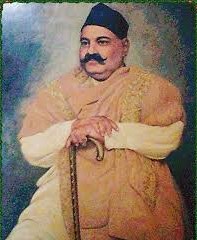
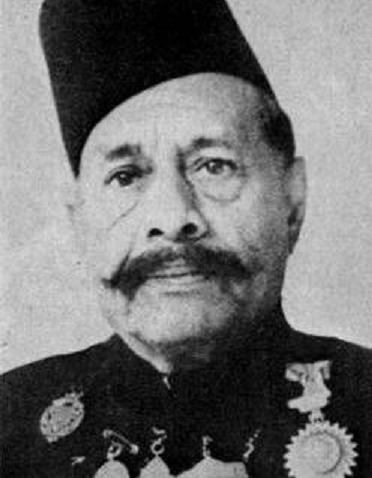
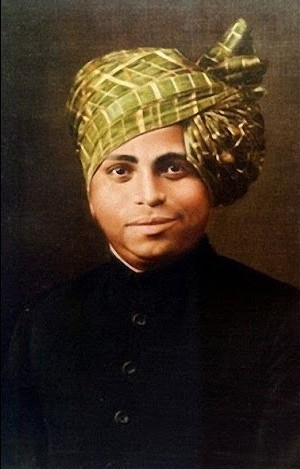
This composition, titled Khyal, is a contemporary reflection on that tradition. Written in April 1991 and revised in September 2025, it draws its melodic material from transcriptions of vocal improvisations by some of the great classical singers of northern India. The opening movement is based on an improvisation by Bade Ghulam Ali Khan (1903–1968), while the concluding movement takes inspiration from a vocal improvisation by Narayan Rao Vyas (1902–1984).
The work unfolds in four movements, each evoking a different moment in time and atmosphere through its chosen raag:
1 After midnight (raag Malkauns)
2 Late morning (raag Desi)
3 Night music (raag Bageshri)
4 Monsoon rains (raag Gaud Malhar)
Balancing historical reference with imaginative re-composition, Khyal pays homage to a centuries-old tradition while reinterpreting it for a new musical context.
Score
Audio
Instrumental parts
Instrumental parts are available at the International Music Score Library Project (IMSLP)
Images
Original version (1991)

s sax, b sax, tpt, tbn, pno (+ harm), 2 perc, 2 vln, vla, vcl, db
Duration: c. 16 minutes
Commissioned by the Sherman Theatre, Cardiff
Khyal consists of a series of pieces written during April 1991. Each section is named after a rag, a Hindu word for a scale or mode, and the melodic material has been drawn from transcriptions of vocal improvisations by classical singers from the northern regions of India.
Khyal, meaning ‘lyric’ as well as ‘imagination’, is a genre of Indian classical music which was cultivated in the royal courts of Hindustan. Legend, scattered commentary and speculation suggest that the genre originated with the poet and composer Amir Khusrau Dihlavi (1251 – 1326).
From about the mid-eighteenth century, the art of singing khyal developed through hereditary musicians and the musical knowledge fostered within families who specialised in vocal music. In performing khyal, the singer presents a brief composition and then improvises according to certain guidelines.
In the present set of pieces, the first section Malkauns is based on an improvisation by Bade Ghulam Ali Khan (1903 – 1968); Jaya Javanti is inspired by an improvisation by Faiyaz Husain Khan (1886 – 1950); and Gaud Malhar takes as its starting point a vocal improvisation by Narayan Rao Vyas (1902 – 1984).
i. Malkauns
ii. Jaya Javanti
iii. Desi
iv. Gaud Malhar
First concert performance by Charlie Barber + Band at Chapter Theatre, Cardiff on 17 September 1991
with James Mainwaring (soprano saxophone), Matthew Bailey (baritone saxophone), Jonathan Mainwaring (trumpet), Gwyn Daniels (trombone), Gareth Davies (piano), Phil Girling (percussion), Andy Cookson (percussion), Alison Francis (violin), Richard Treglown (violin), Matthew Roberts (viola), Vicki Higginson (cello), Robin Hames (double bass)
Background
Performances
| 17.09.91 | CARDIFF | Chapter Theatre |
| 29.04.94 | CARDIFF | Chapter Theatre |
| 28.02.95 | LONDON | St Giles Church, Cripplegate |
| 02.03.95 | CARDIFF | City United Reformed Church |
| 07.03.95 | MANCHESTER | Royal Northern College of Music |
| 18.06.96 | LONDON | St Giles Church, Cripplegate |
| 22.06.96 | CARDIFF | Llandaff Cathedral |
Related content




Ekstasis (1995)

Xtra Acts (1994)
Musica Mundi (1991)
Works index
 |  |  |
 |  |  |
 |  |
 Charlie Barber